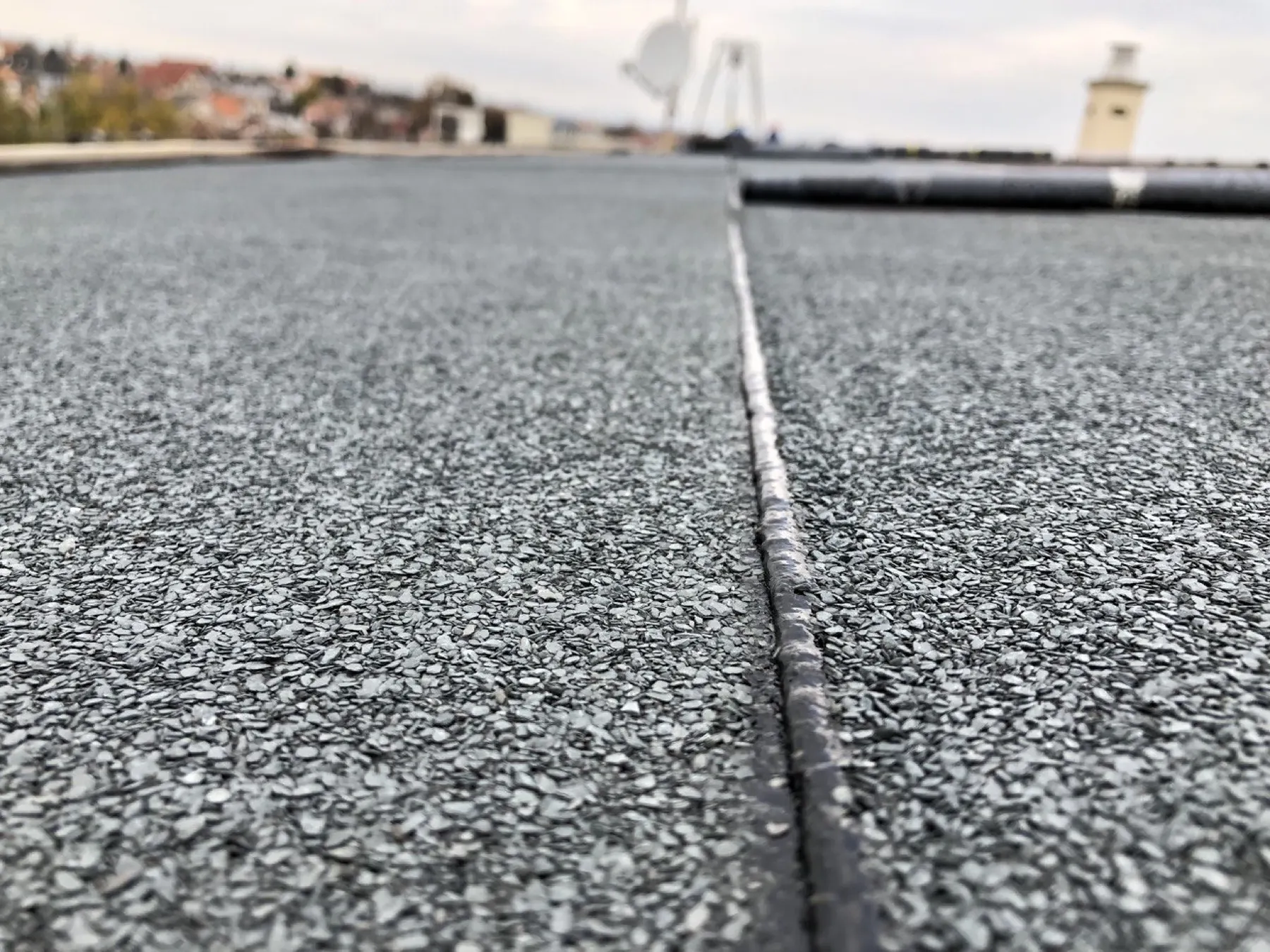
APP, or atactic polypropylene, traces its history to Nobel laureate Professor Natta and developments in polymer molecular chains. It later began to be manufactured specifically for bitumen roofing membranes.
Compared with oxidised bitumen, APP alone only partly improves low-temperature resistance. It is therefore often combined with other polyolefins, such as polyalphaolefins and ethylene-propylene-butene compounds, to improve membrane performance.
APP membranes are manufactured continuously by impregnating a reinforcement with bitumen modified with polyolefin polymers. They combine a waterproofing compound with a nonwoven polyester carrier.
The modification content in bitumen ranges from 17 to 35%.
WHY CHOOSE APP MODIFICATION?
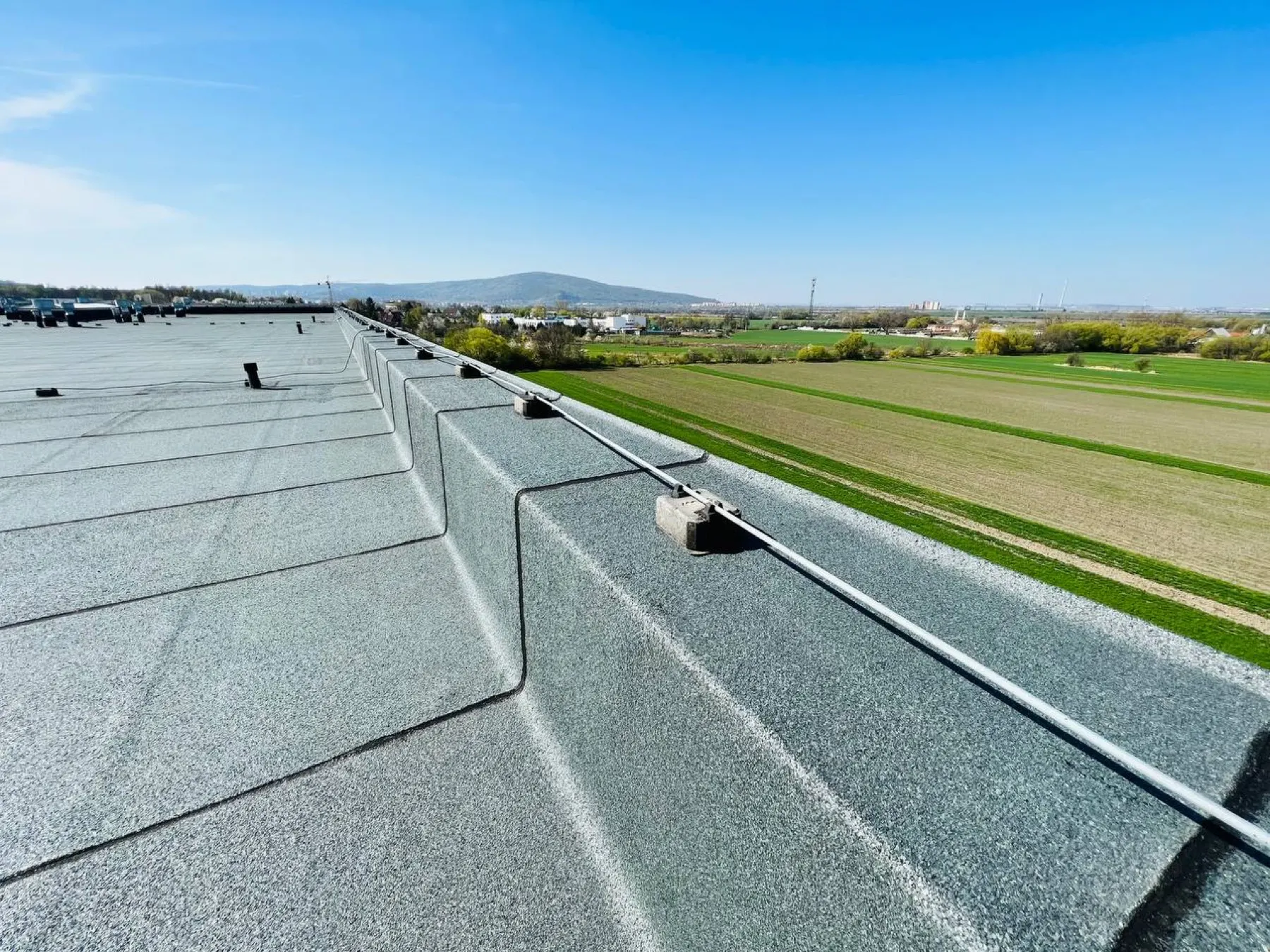
APP offers excellent UV resistance; highly modified products may not require mineral surfacing or another protective finish.
A high softening point makes the membranes suitable for sun-exposed areas and sloping or vertical roof details. They can also be used on walkable roofs, including beneath mastic asphalt where the system permits.
The membranes are easy to work with at high temperatures and remain stable during installation. In winter, more heat is needed to melt them, reducing this advantage.
APP has a plastic character: after stretching, it shows little or no recovery, and repeated stretching may damage the waterproofing layer.
APP bitumen membranes are generally somewhat stiffer than other modifications and can offer greater puncture resistance.
SBS-MODIFIED BITUMEN MEMBRANES
SBS modification emerged in the late 1960s and early 1970s. Styrene-butadiene-styrene is a synthetic thermoplastic rubber with linear, star-shaped or cross-linked chains. It generally makes up 8–22% of the bitumen formulation. The material softens readily, making it practical to install and shape without vulcanisation.
SBS membranes are made by continuously impregnating a carrier with distilled bitumen modified by thermoplastic elastomers such as SBS and SIS. An elastic waterproofing compound and dimensionally stable polyester carrier enable high elasticity, with the source describing elongation up to 200% and cold flexibility down to −20°C.
The modification was developed in France as an improvement to conventional bitumen. The first solid, thin SBS roofing membrane installed by torch heating was developed in the late 1970s.
WHY CHOOSE SBS MODIFICATION?
Elastic behaviour allows recovery after stretching
Easy low-temperature processing and energy savings during installation.
The underside can be made self-adhesive or easy to melt.
Some membrane types allow joints to be welded with hot air or a concealed flame.
Joints between adjacent membranes withstand tangential forces.
POTENTIAL DRAWBACKS OF SBS MODIFICATION
Acceptable, but not optimal, compatibility with oxidised bitumen membranes.
Less heavily modified SBS membranes may flow or slip on vertical surfaces.
APP VS SBS: WHICH MODIFICATION IS BETTER?
APP formulations contain a range of plastomeric and elastomeric polymers. They can offer low-temperature flexibility at −20 to −25°C, approaching SBS products, while developments in SBS have raised softening points to 120–130°C.
Despite chemical similarities, their physical and mechanical properties differ. SBS is associated with high elasticity and fatigue resistance, with elongation in the 100–300% range, but needs protection from sunlight. APP generally has lower viscosity at high temperatures, allowing quicker bonding when heated, and remains firmer when hot; SBS becomes soft and tacky.
Select a specific product according to the roof design and its declared performance.