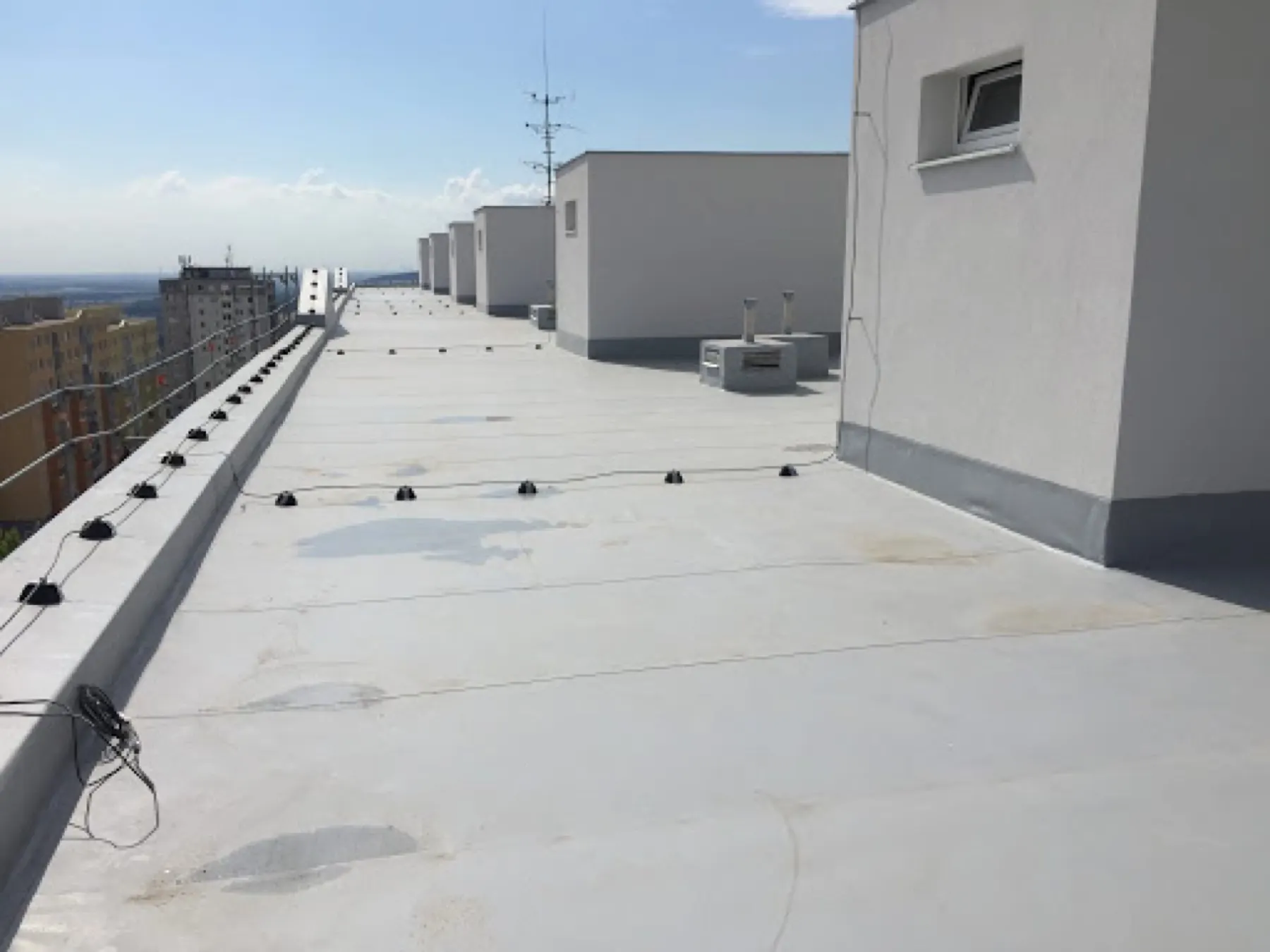
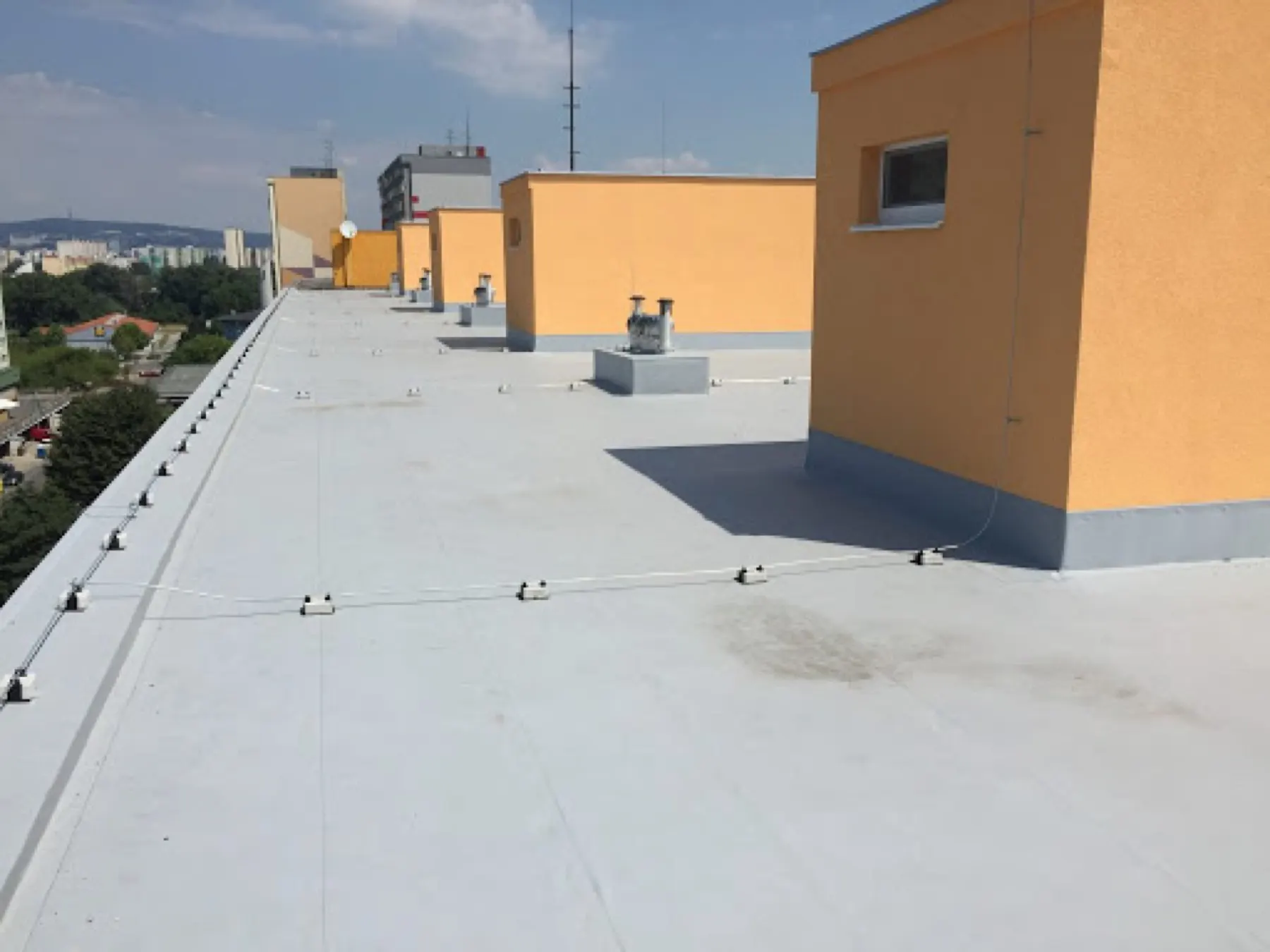
Roofing membranes offer a quick, straightforward waterproofing method. They must be separated from incompatible existing coverings and insulation, typically with geotextile. PVC contains plasticisers that can migrate over time, reducing flexibility.
TPO, a thermoplastic polyolefin, is an alternative with different environmental and durability characteristics. PVC and TPO systems can be mechanically fixed or held down with ballast, such as gravel or a green roof, where the design permits.
WATERPROOFING MEMBRANE
A roofing membrane is a single-layer waterproof sheet, with or without reinforcement. It is based on plastomers or elastomers and produced using processes such as calendering, extrusion and coating.
Joints use techniques such as hot-air welding or double-sided tape, depending on the system. A single membrane layer can be mechanically fixed to the roof. Appropriate products offer elasticity and resistance to ozone, UV, roots, acid rain and flying sparks.
Other advantages include low weight, limited maintenance, flame-free overlap joints and suitability for different roof slopes.
Drawbacks include susceptibility to mechanical damage, burn-through and dimensional changes.
PLASTICISED PVC MEMBRANES
PVC membranes are widely used in Europe. Originally unreinforced, they were strengthened to meet dimensional stability requirements. They are also used as linings for hydraulic structures and tunnels.
PVC consists of hydrocarbon chains with chlorine atoms. Formulations also include UV stabilisers, fungicides and pigments.
PVC membranes are usually 1.2–2.4 mm thick, occasionally up to 3 mm. They are joined with hot-air welding or specialist PVC-based solvents and adhesives.
Common PVC membranes contain monomeric plasticisers that migrate over time. Direct contact with polystyrene or bituminous layers can accelerate this process, causing loss of flexibility and brittleness. Migrating plasticisers can also attack polystyrene and dissolve bitumen. PVC therefore needs separation from these materials, usually with geotextile.