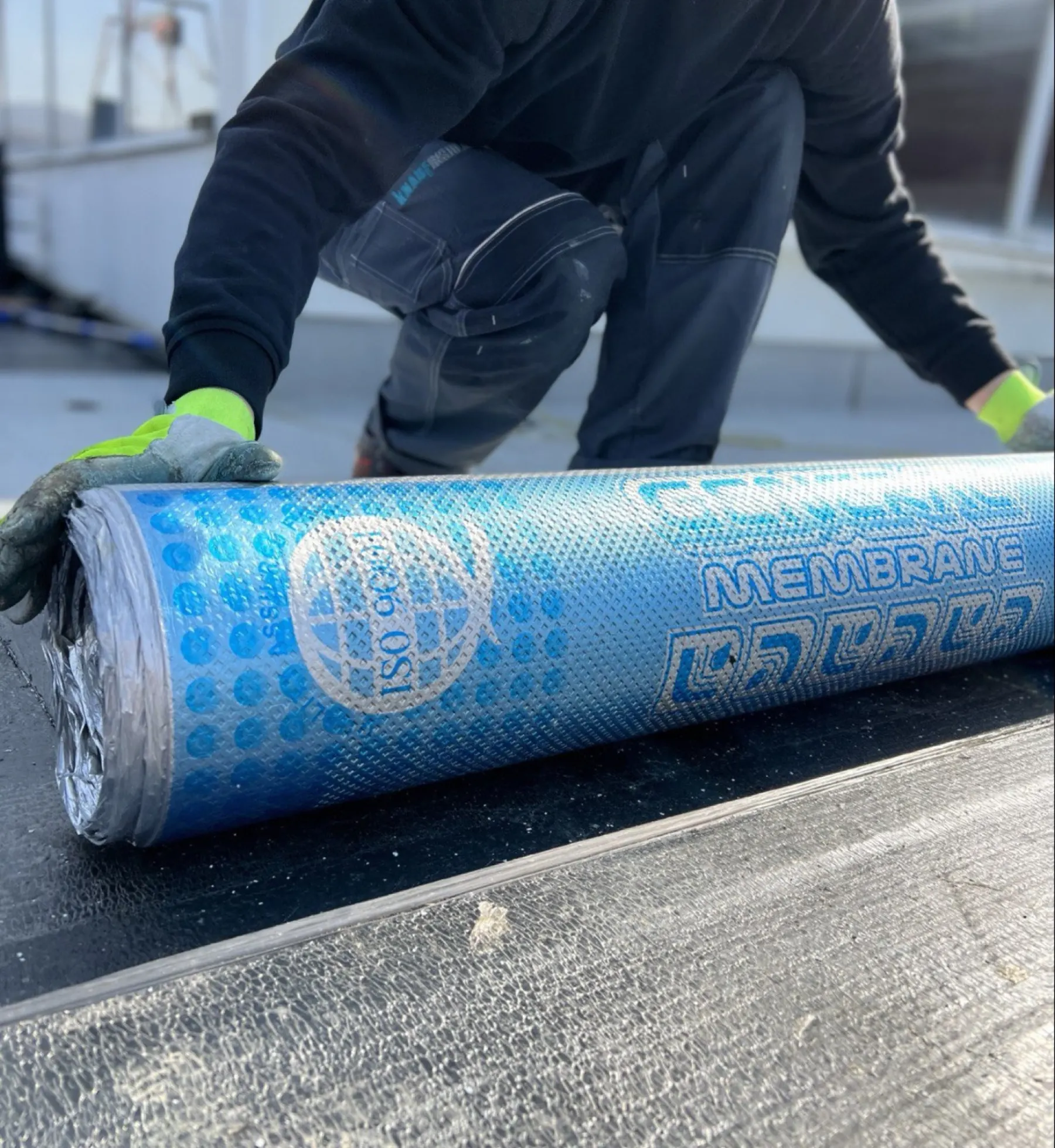
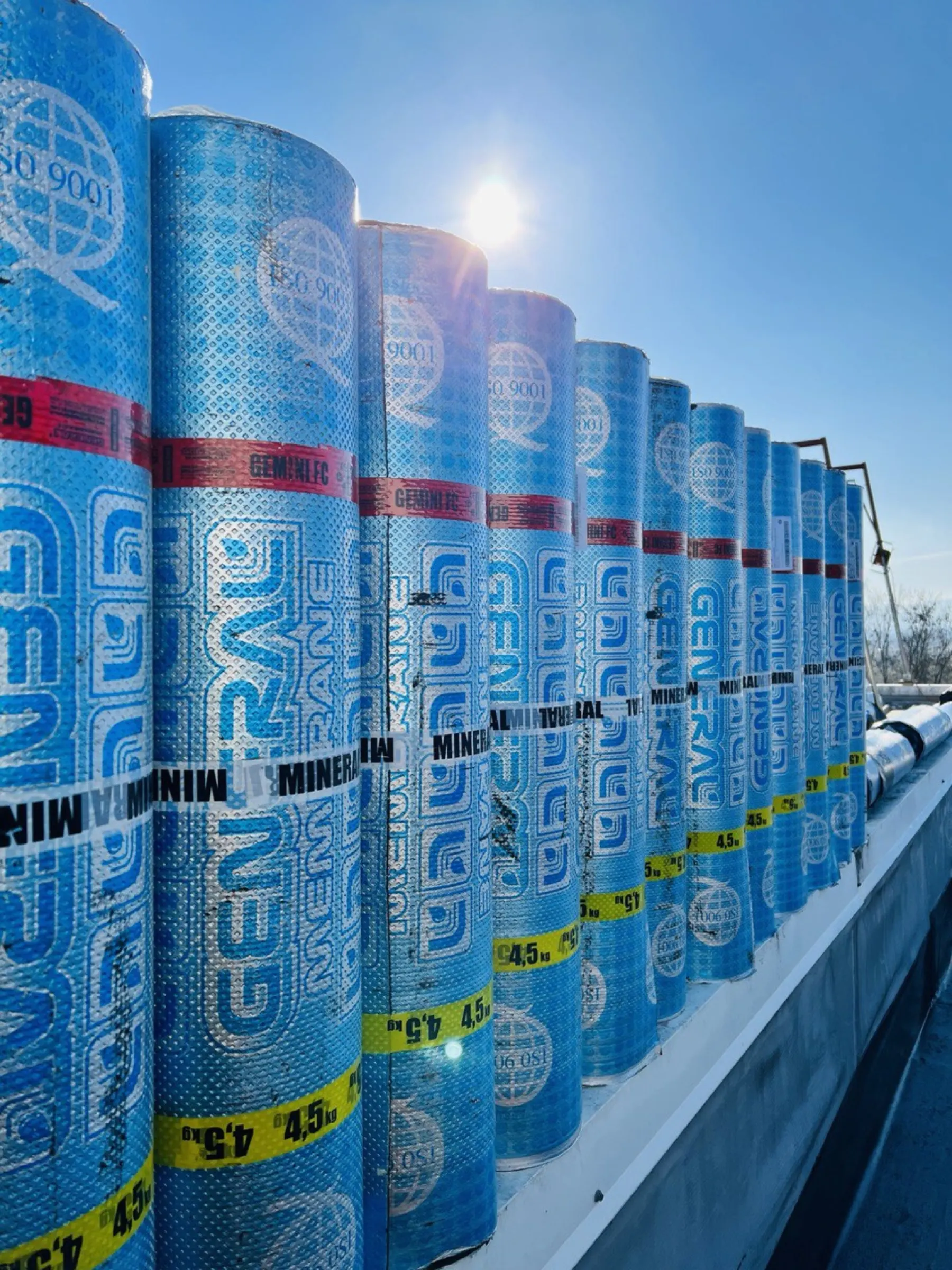
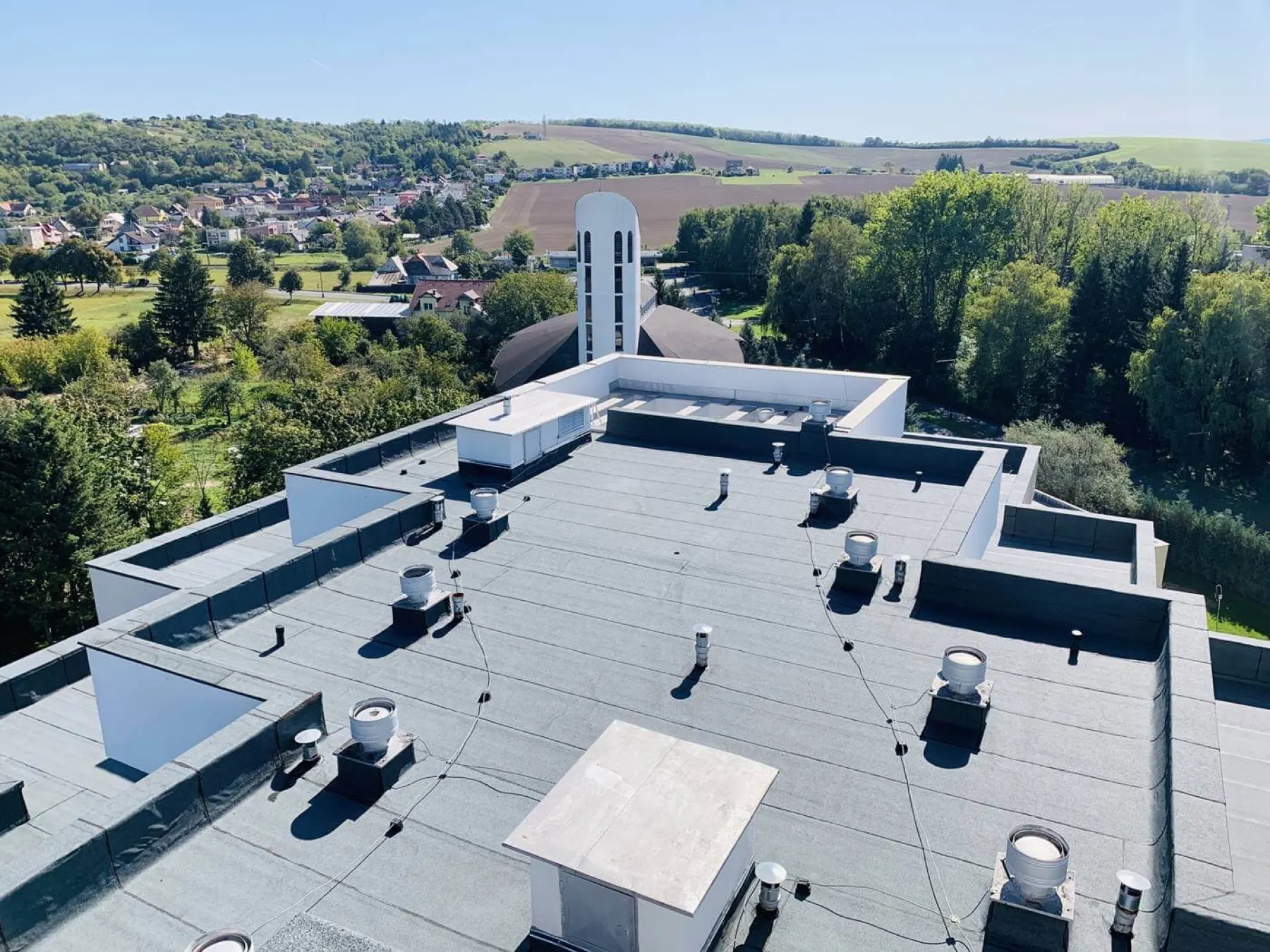
GENERAL MEMBRANE modified bitumen membranes are presented as offering higher quality and durability than conventional bitumen membranes and roofing foils. Modifications include SBS, APP and APAO; we work with APP and APAO.
A polyester reinforcement combined with modified bitumen allows the material to stretch by 45–80% without damage. APP and APAO products are designed to remain intact as they age and to withstand demanding conditions. The source product information describes torch application from −30°C and flow at surface temperatures above 150°C.
A natural slate mineral finish protects the surface and makes it walkable. Specific properties and installation limits must match the selected product.
APP-MODIFIED BITUMEN MEMBRANES
APP, or atactic polypropylene, traces its history to Nobel laureate Professor Natta and developments in polymer molecular chains. It later began to be manufactured specifically for bitumen roofing membranes.
Compared with oxidised bitumen, APP alone only partly improves low-temperature resistance. It is therefore often combined with other polyolefins, such as polyalphaolefins and ethylene-propylene-butene compounds, to improve membrane performance.
APP membranes are manufactured continuously by impregnating a reinforcement with bitumen modified with polyolefin polymers. They combine a waterproofing compound with a nonwoven polyester carrier.
The modification content in bitumen ranges from 17 to 35%.
SBS-MODIFIED BITUMEN MEMBRANES
SBS modification emerged in the late 1960s and early 1970s. Styrene-butadiene-styrene is a synthetic thermoplastic rubber with linear, star-shaped or cross-linked chains. It generally makes up 8–22% of the bitumen formulation. The material softens readily, making it practical to install and shape without vulcanisation.
SBS membranes are made by continuously impregnating a carrier with distilled bitumen modified by thermoplastic elastomers such as SBS and SIS. An elastic waterproofing compound and dimensionally stable polyester carrier enable high elasticity, with the source describing elongation up to 200% and cold flexibility down to −20°C.
The modification was developed in France as an improvement to conventional bitumen. The first solid, thin SBS roofing membrane installed by torch heating was developed in the late 1970s.
APAO-MODIFIED BITUMEN MEMBRANES
APAO membranes combine bitumen modified with amorphous polyalphaolefins and selected stabilising fillers.
This thermoplastic compound uses ethylene, propylene and butene components formulated to combine with bitumen.
The compound offers high resistance to heat ageing, extending its service life. APAO membranes with thermal stability can be used in a range of climates and are particularly suitable for roofs that are difficult to access.
Cold flexibility allows use in colder climates. The formulation also resists ultraviolet radiation, which matters on sun-exposed flat roofs. APAO can avoid footprints during installation, helping achieve a clean finished appearance.